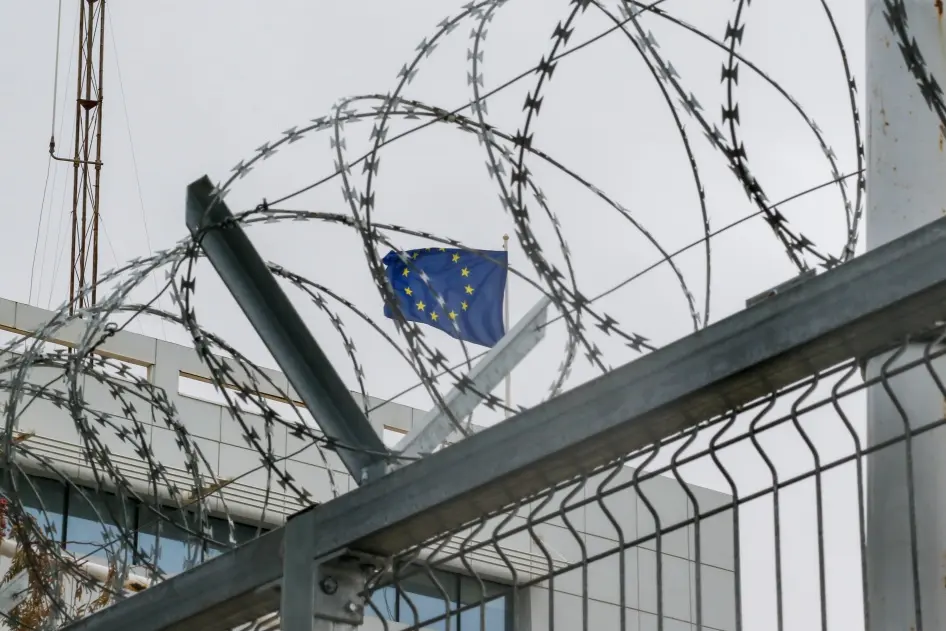
The European Commission’s ambitious Digital Justice @2030 Strategy promises to transform how justice is delivered across Europe, but raises critical questions about fundamental rights, judicial independence, and the future of legal practice
On November 20, 2025, the European Commission unveiled its Digital Justice Package, a comprehensive roadmap that will fundamentally reshape how justice systems operate across the European Union by 2030. For those of us practicing criminal defense, particularly in cross-border cases, this strategy represents both unprecedented opportunities and profound challenges that demand our immediate attention.
The Promise and the Peril
The Commission’s vision is seductive in its efficiency. Imagine a justice system where AI assistants help process mass litigation, where videoconferencing seamlessly connects courts across borders, where legal research happens instantaneously through unified databases. The strategy points to Germany’s OLGA system, an AI assistant helping judges navigate the thousands of appeals following the Dieselgate scandal, as proof that artificial intelligence can deliver real gains in judicial efficiency.
Yet as criminal defense lawyers, we must ask the harder questions. When the Commission acknowledges that “AI tools should only support, and never replace, the judges in their decision-making,” how do we ensure this principle survives the pressure for faster case processing? When AI systems analyzing and interpreting facts and law are classified as “high-risk” under the AI Act, what safeguards will protect our clients from algorithmic bias or opacity?
Fourteen Actions That Will Change Your Practice
The strategy lays out fourteen specific actions spanning seven key areas. By the end of 2026, the Commission will create a “living repository” of digital tools used across EU justice systems and develop an IT toolbox that Member States can adopt. These initiatives aim to address the current fragmentation where different countries develop similar solutions in isolation, driving up costs and reducing interoperability.
For criminal practitioners, the videoconferencing provisions deserve particular scrutiny. Currently, no EU-wide rules govern remote participation of suspects or accused persons in court hearings across borders, except for evidence gathering. The Commission plans to change this through revisions to the European Investigation Order Directive, enabling defendants in one Member State to participate remotely in proceedings in another. While this could reduce detention time and facilitate defense preparation, we must ensure that procedural safeguards match those available in physical courtrooms. The right to confrontation, to assess witness credibility, to private consultation with counsel—these cannot be casualties of convenience.
The AI Act Meets the Courtroom
Perhaps most consequential for criminal defense is Action 4, which commits the Commission to elaborate guidelines on high-risk AI systems in justice by February 2026. The AI Act already recognizes that systems researching and interpreting facts and law for judicial decision-making carry inherent risks to fundamental rights. But implementation will determine whether these protections have teeth.
We need clear answers: Will defendants have the right to know when AI influenced decisions in their cases? Can we challenge algorithmic recommendations, access the training data, understand the weighting of factors? Will courts be required to explain how they distinguished between AI assistance and independent judicial reasoning? These questions aren’t theoretical—they’re emerging in courtrooms now, and the February 2026 guidelines will set precedents for decades.
The strategy’s distinction between high-risk and non-high-risk AI applications also warrants attention. Administrative functions like pseudonymizing judicial decisions supposedly carry less risk, but even these seemingly neutral applications can have downstream effects on transparency, legal research, and precedent accessibility.
The European Legal Data Space: Democratization or Surveillance?
The Commission’s plan to create a European Legal Data Space sounds innocuous—unified access to legislation and case law through standardized identifiers (ELI for legislation, ECLI for case law). By 2030, every court decision and piece of legislation across all Member States should be catalogued and searchable.
For legal research, this is transformative. For criminal defense, it’s double-edged. Yes, we gain unprecedented access to comparative jurisprudence that can strengthen our arguments, particularly on human rights issues where Strasbourg jurisprudence intersects with national law. But we must ensure this data infrastructure respects legal professional privilege and doesn’t become a tool for mass surveillance of legal strategies or client matters.
The strategy notes that legal data, unlike most other fields, remains fragmented and less transparent. There are reasons for this fragmentation—some good, some worth reconsidering. As this data becomes machine-readable and analyzable at scale, we need safeguards ensuring that confidential aspects of legal practice remain protected.
Cross-Border Practice in the Digital Age
For those of us handling extradition cases, European Arrest Warrants, and other cross-border criminal matters, the strategy’s emphasis on interoperability cannot come soon enough. The current patchwork of national videoconferencing systems, incompatible document formats, and divergent digital signature requirements creates unnecessary barriers that harm both efficiency and client interests.
The Commission’s proposal for voluntary common technical requirements for videoconferencing by 2027, coupled with funding through the next Multiannual Financial Framework, suggests real investment in solving these problems. The European Digital Identity Wallet and the proposed European Business Wallets could streamline authentication and document exchange, reducing delays that currently plague mutual legal assistance procedures.
But voluntary standards risk recreating today’s fragmentation. We need binding requirements that ensure defense lawyers in Athens can seamlessly appear before courts in Stockholm, that evidence can be shared securely without forensic integrity concerns, that translation services integrate rather than impede digital workflows.
The Fundamental Rights Imperative
Throughout the strategy, the Commission emphasizes that “digitalisation in justice must respect the rule of law and fundamental rights.” This commitment appears repeatedly, almost as incantation against the documented risks of algorithmic bias, surveillance creep, and erosion of procedural protections.
Yet the strategy relies primarily on non-legislative actions, meaning its success depends on voluntary cooperation between Member States and the Commission. This soft-law approach may prove insufficient when fundamental rights collide with efficiency gains. We’ve seen this tension play out already—Member States enthusiastically adopt digital tools that promise cost savings while being far less diligent about corresponding rights protections.
The strategy’s requirement that “non-digital channels must remain available alongside digital tools” to guarantee equal access is crucial but vague. What constitutes adequate access? If a jurisdiction offers digital-first procedures with analog options only by special request, does this create a two-tier system where the most vulnerable defendants face additional procedural hurdles?
What Criminal Defense Lawyers Must Do Now
This strategy will fundamentally reshape our practice whether we engage with it or not. The question is whether the criminal defense community will help shape its implementation or merely react to decisions already made.
First, we need representation in the Commission’s stakeholder consultations on AI guidelines and videoconferencing standards. The Council of Bars and Law Societies of Europe (CCBE) participated in the High-Level Fora that informed this strategy, but sustained engagement across all fourteen action items requires dedicated resources and coordinated advocacy.
Second, we should begin documenting how existing digital tools affect our ability to provide effective defense. When does videoconferencing impair attorney-client privilege? Which AI-assisted research tools introduce bias or miss relevant precedents? What digital identity systems create barriers for vulnerable populations? Evidence-based advocacy will prove far more effective than abstract concerns.
Third, we need to develop our own digital competencies. The strategy emphasizes training for judges and court personnel, but defense lawyers require equivalent investment in understanding these technologies, not just using them. We cannot effectively challenge algorithmic evidence or cross-examine AI-assisted expert testimony without comprehending how these systems actually function.
Finally, we must insist on transparency. Every action item in this strategy should include clear mechanisms for public accountability, evaluation metrics that include fundamental rights protections rather than just efficiency gains, and meaningful opportunities for course correction when implementation falls short of principles.
The 2030 Horizon
Six years from now, when the Digital Justice @2030 strategy reaches its target date, European justice systems will look dramatically different than they do today. The question isn’t whether this transformation will happen—the Commission’s commitment, coupled with substantial EU funding, makes it inevitable. The question is whether this digital future will strengthen or undermine the fundamental rights that define European justice.
As criminal defense lawyers, we practice at the intersection where state power meets individual liberty. This is precisely where the promises of digital efficiency and AI assistance face their most searching tests. A justice system that works faster but fails to protect the presumption of innocence, that processes more cases but reduces judicial independence, that achieves administrative savings while creating new barriers to effective defense—such a system would represent progress in name only.
The Digital Justice @2030 Strategy acknowledges these tensions. Now comes the harder work of ensuring that its implementation honors those acknowledgments rather than treating them as obstacles to overcome. The fourteen actions outlined in this strategy will shape justice systems for decades. Criminal defense lawyers must be present for every step of their realization, bringing not just our technical concerns but our fundamental commitment to human dignity in the face of state power—now algorithmic as well as analog.
The courtroom of 2030 may look very different from today’s, but the questions at its heart remain unchanged: Can the accused mount an effective defense? Will the process be fair? Can we trust the outcome? Our role is ensuring that no amount of digital innovation renders these questions obsolete or, worse, unanswerable.
The full Digital Justice @2030 Strategy and accompanying European Judicial Training Strategy are available on the European Commission’s website. Criminal defense practitioners are encouraged to review the complete documents and participate in upcoming stakeholder consultations on AI guidelines and implementation standards.